The Influence of Payout Timelines on Live Dealer Incentive Structures in Account-Free Mobile Platforms
Rafael Krüger · Aug 24, 2026
The Influence of Payout Timelines on Live Dealer Incentive Structures in Account-Free Mobile Platforms
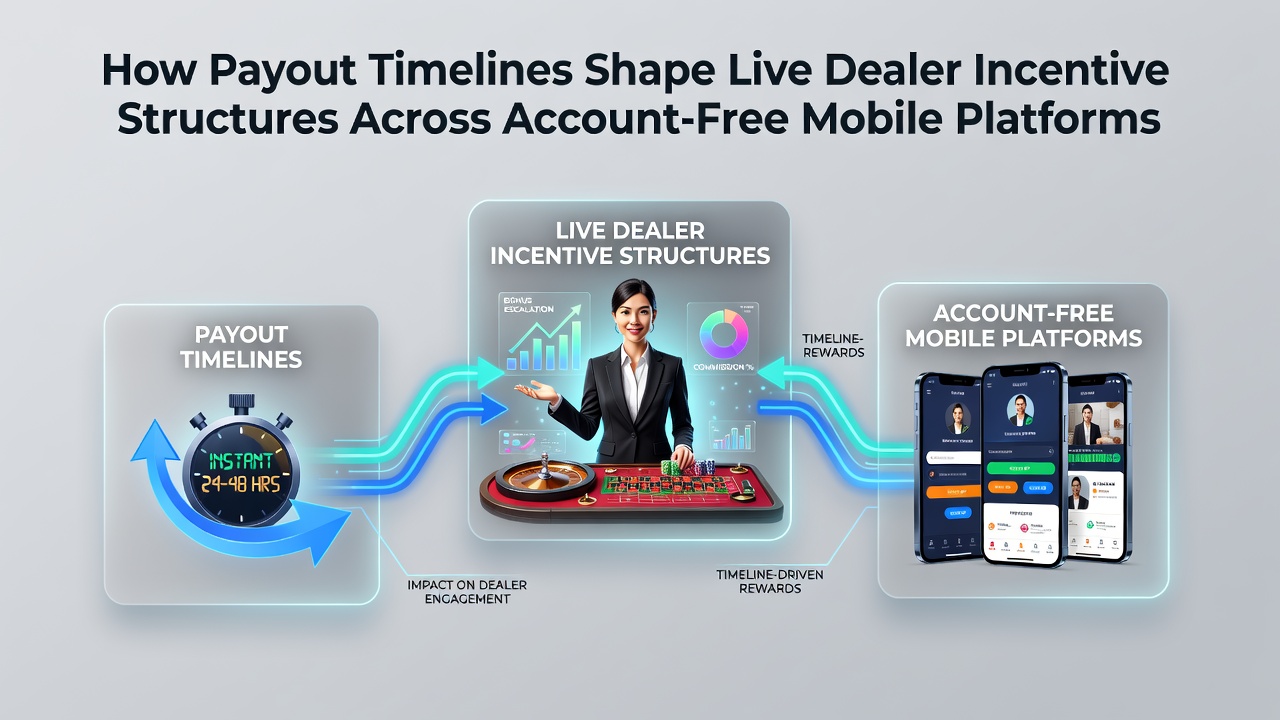
Account-free mobile platforms have altered how operators structure incentives for live dealer games, and payout timelines play a central role in those designs because instant transaction methods eliminate registration barriers while tying reward releases directly to deposit and withdrawal speeds. Data from multiple markets shows that platforms using bank transfer integrations or digital wallet connections process disbursements in minutes rather than days, which in turn prompts operators to align bonus triggers with those same rapid cycles to maintain player engagement across live tables.
Transaction Speed and Bonus Allocation Patterns
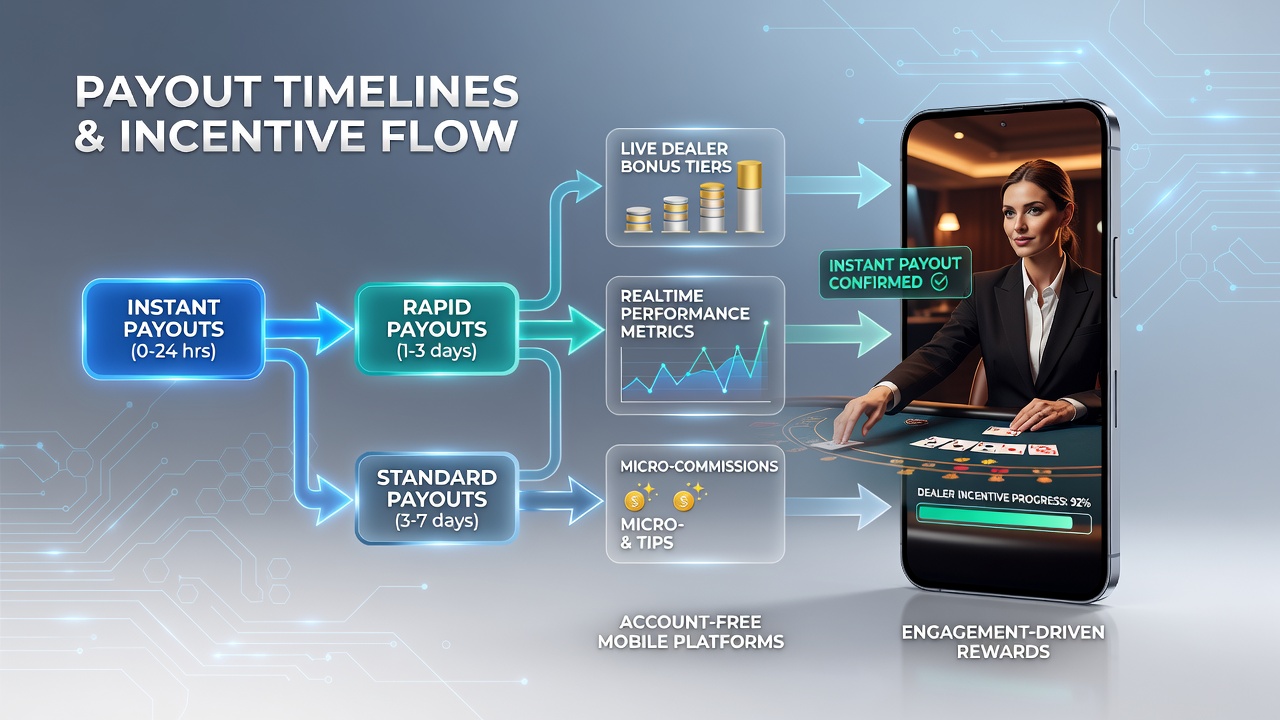
Operators on these platforms adjust welcome incentives and ongoing promotions based on how quickly funds move through the system, since shorter payout windows allow for more frequent reward distributions without accumulating unclaimed balances. Research indicates that when withdrawal processing drops below thirty minutes, live dealer cashback offers increase in frequency and often tie directly to session volume rather than cumulative losses over extended periods. This adjustment occurs because platforms can verify and release funds in real time, reducing the need for delayed verification steps that traditional accounts require.
Figures from industry reports reveal that account-free environments in August 2026 recorded higher allocation rates for table-specific bonuses, such as increased rakeback percentages on blackjack and roulette streams, precisely when payout confirmation happened within the same hour as the triggering bet. Those who've studied transaction logs note that slower methods, like certain card processors taking twenty-four hours, correlate with fewer live dealer incentives overall and a shift toward free spin bundles instead of cash equivalents.
Mobile Interface Constraints and Reward Timing
Screen size and touch-based navigation further shape these structures because players on mobile expect seamless flows from deposit to live table entry to reward claim, and any mismatch in payout timelines disrupts that continuity. Studies found that platforms optimizing for under-five-minute withdrawals introduced tiered live dealer incentives where the first cashback layer unlocks immediately after a qualifying hand, while higher tiers require only an additional verified transaction rather than a full account review.
According to analyses from the New Jersey Division of Gaming Enforcement, mobile sessions on registration-free sites showed elevated retention when incentive releases matched the speed of the underlying payment rails, whereas delays prompted players to migrate toward platforms with quicker cycles. This pattern holds across regions where digital wallets dominate, including markets tracked by the Australian Communications and Media Authority, where data shows similar correlations between disbursement velocity and live dealer promotion uptake.
Regional Regulatory Influences on Structure Design
Regulatory frameworks in different jurisdictions add another layer, as licensing bodies require clear disclosure of timelines that then influence how operators craft live dealer rewards to stay compliant while remaining competitive. In environments where authorities mandate maximum payout windows of one hour for approved methods, incentive structures often incorporate progressive multipliers that activate upon each confirmed withdrawal, encouraging repeated live play without lengthy holds. Observers note that this approach appears more frequently on platforms serving Canadian provinces, where the Canadian Gaming Association has documented rising volumes of table game activity tied to instant settlement features.
Yet platforms operating under broader EU guidelines sometimes face varied enforcement, leading to hybrid models where live dealer incentives split between immediate small rewards and larger periodic payouts to accommodate differing national rules. Academic work from gaming research centers indicates that these splits help stabilize player behavior across mobile sessions by aligning reward cadence with the platform's chosen transaction providers rather than forcing uniform schedules.
Future Adjustments in Live Dealer Ecosystems
As payment technology continues to advance, operators are expected to refine incentive layers further so that live dealer rewards become even more granular and responsive to individual payout histories. Evidence suggests that integration of faster rails, such as those emerging in 2026, will push more platforms toward dynamic bonus tables that update in real time based on withdrawal confirmations, reducing reliance on static weekly or monthly offers. This evolution keeps the focus on live dealer continuity because players encounter fewer interruptions between sessions when funds and rewards move together.
Conclusion
Payout timelines therefore function as a foundational element that determines the form, frequency, and accessibility of live dealer incentives on account-free mobile platforms, with data consistently showing tighter alignment between transaction speed and reward design across multiple regulated markets. Those monitoring these systems observe ongoing adaptations that prioritize speed to sustain engagement in live environments while meeting regulatory expectations.