Correlating Player Retention Signals with Initial Offer Customizations in Instant Payout Live Dealer Environments
Gisela Berger · Jul 29, 2026
Correlating Player Retention Signals with Initial Offer Customizations in Instant Payout Live Dealer Environments
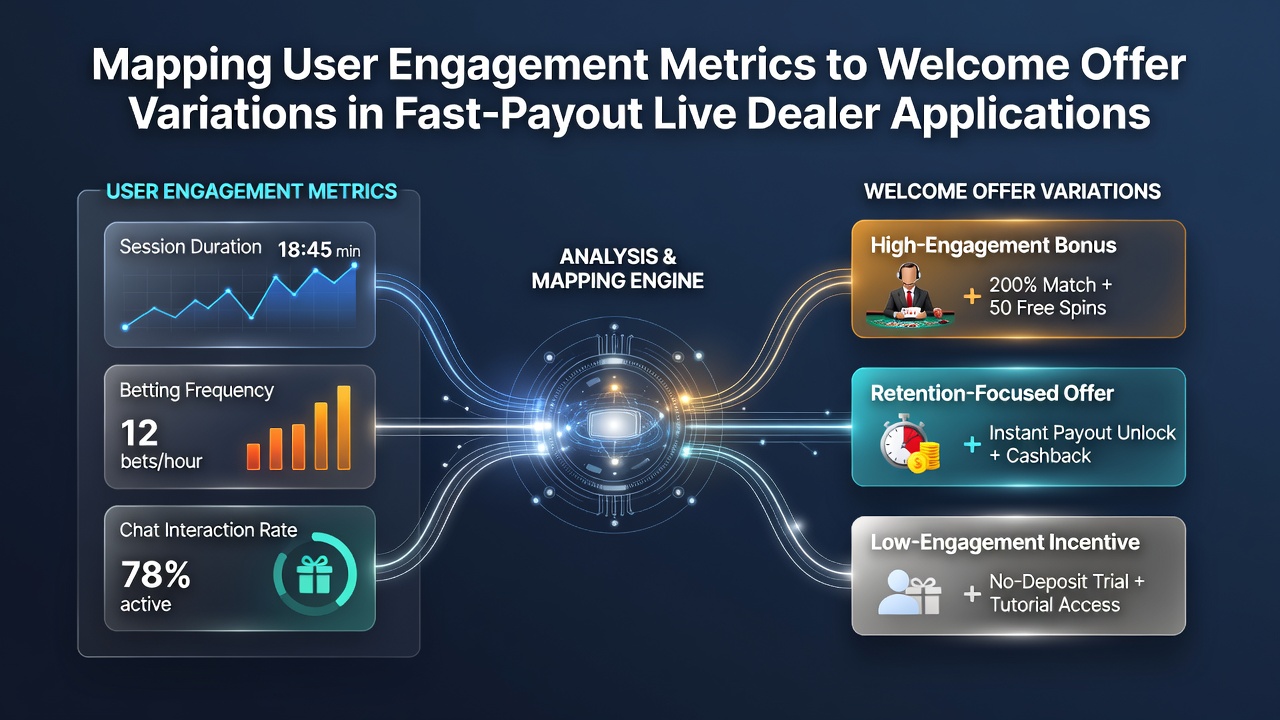
Industry analysts track how session length, bet frequency, and deposit patterns align with different welcome offer structures across registration-free platforms that deliver rapid withdrawals. Data from multiple markets shows operators adjust bonus amounts, cashback percentages, and free bet allocations based on real-time activity logs collected during the first hours of play. In July 2026 several European and North American providers reported measurable shifts in these mappings after introducing tiered welcome packages that scale according to average wager size within the opening thirty minutes.
Key Engagement Indicators and Their Role
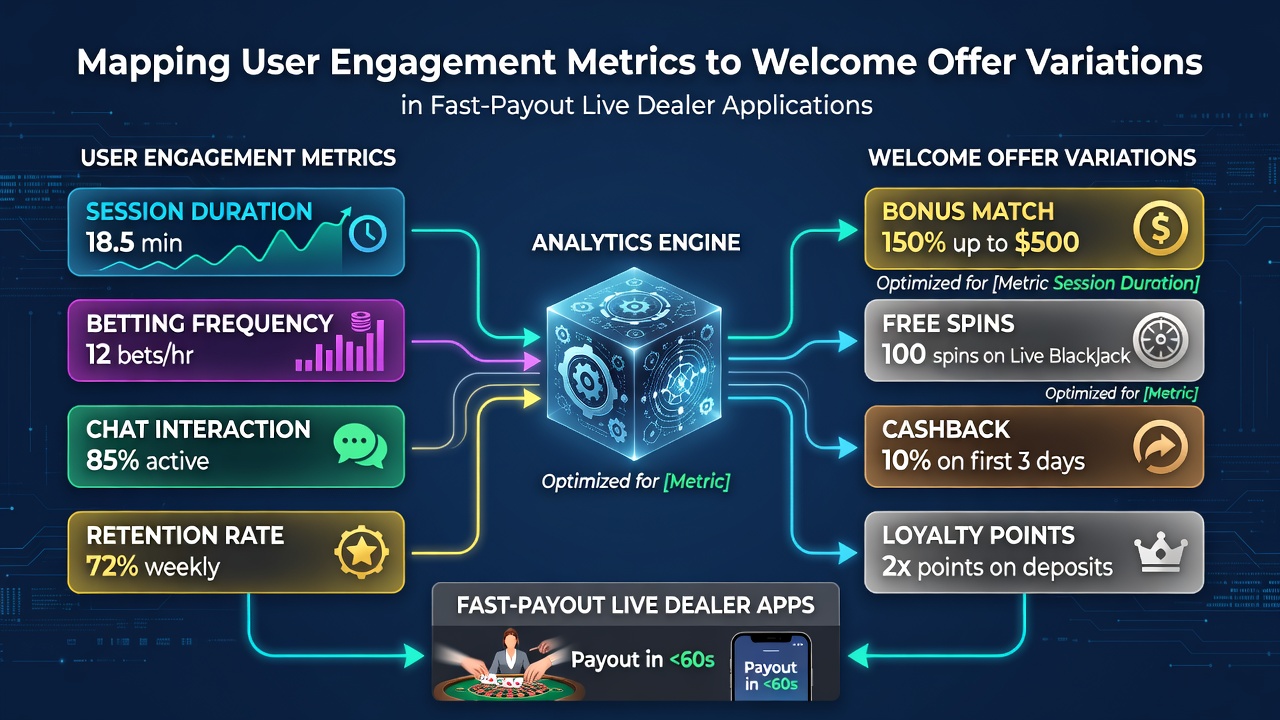
Session duration serves as a primary signal because longer initial interactions often precede higher lifetime value; platforms therefore link extended playtime to larger deposit match percentages while shorter bursts receive smaller fixed credits. Bet frequency data reveals whether users prefer steady small wagers or occasional larger stakes, and operators respond by varying the number of free spins or live dealer table credits attached to the first deposit. Average deposit velocity, measured as time between account funding and first wager, further refines the offer because quicker deposits correlate with immediate cashback tiers in many systems.
Research conducted by the New Jersey Division of Gaming Enforcement indicates that platforms incorporating these three metrics together achieve more precise segmentation than those relying on single variables alone. Observers note that live dealer applications benefit particularly from this approach since table games generate richer telemetry than slot-only environments.
Variation Patterns Across Offer Types
Welcome packages typically fall into three broad categories: percentage-based deposit matches, fixed-amount credits, and hybrid bundles that combine both with free rounds. When engagement metrics show high table game participation, operators increase the live dealer-specific portion of the bundle while reducing slot-focused elements. Conversely, users who migrate quickly to automated games receive adjusted offers that emphasize spin credits over table bonuses. Figures from Canadian provincial reports released in spring 2026 confirm that hybrid structures grew by eighteen percent year-over-year precisely in jurisdictions where fast-payout technology reduced withdrawal times below fifteen minutes.
Regional Data and Platform Comparisons
North American operators emphasize cashback variations tied to hourly loss limits, whereas Australian and Asian platforms more frequently adjust free bet quantities based on game-type transitions recorded during the first session. A study published by the University of Nevada, Las Vegas International Gaming Institute found that platforms offering instant withdrawal options recorded a twenty-three percent increase in repeat visits when welcome offers were recalibrated daily using the previous day's engagement clusters. European operators outside the United Kingdom have adopted similar frameworks, drawing on aggregated transaction data supplied by payment processors rather than individual account histories.
What's notable is the speed at which these adjustments occur; several providers now update offer parameters within two hours of detecting shifts in average session length or wager distribution. This responsiveness stems from automated scoring models that assign users to micro-segments and push revised welcome terms before the second deposit window opens.
Technical Implementation and Measurement Challenges
Mapping requires integration between front-end game servers and backend analytics engines capable of processing live streams of bet and time-stamp data. Accuracy depends on consistent event tagging across different live dealer providers, a task complicated when multiple studios feed into a single mobile application. Industry associations such as the European Gaming and Betting Association have issued guidelines recommending standardized event schemas that allow cross-platform comparison of engagement metrics.
Those who have examined the data note that privacy-compliant aggregation remains essential because registration-free models limit the depth of user profiles available for modeling. Consequently, many systems rely on device-level and behavioral signals rather than personal identifiers when determining which welcome variation to display.
Conclusion
Evidence from regulatory filings, academic research, and platform telemetry demonstrates clear connections between engagement metrics and the customization of welcome offers in fast-payout live dealer applications. Continued refinement of these mappings depends on consistent data standards and cross-regional reporting practices that emerged more prominently during the first half of 2026. As withdrawal speeds remain a competitive factor, the precision of metric-to-offer linkages will likely determine which platforms sustain higher initial retention rates.